Make Some Noise
Turning the ocean's soundscape into numbers you can trust — and signals you can name.
Earlier we said MARLIN listens, thinks, and reports by itself. Now we open the hood on the listening and the thinking with this update: calibrated acoustic metrics, in-house detection models, and a way to see both at once.
“The ocean is never silent. The hard part is turning that noise into numbers you can defend — and signals you can name.” — Field notes, MARLIN team
Two jobs, one system
Most acoustic tools pick a lane. Some measure how loud the sea is. Others try to recognise what's in it. MARLIN does both — and treats them as one pipeline.
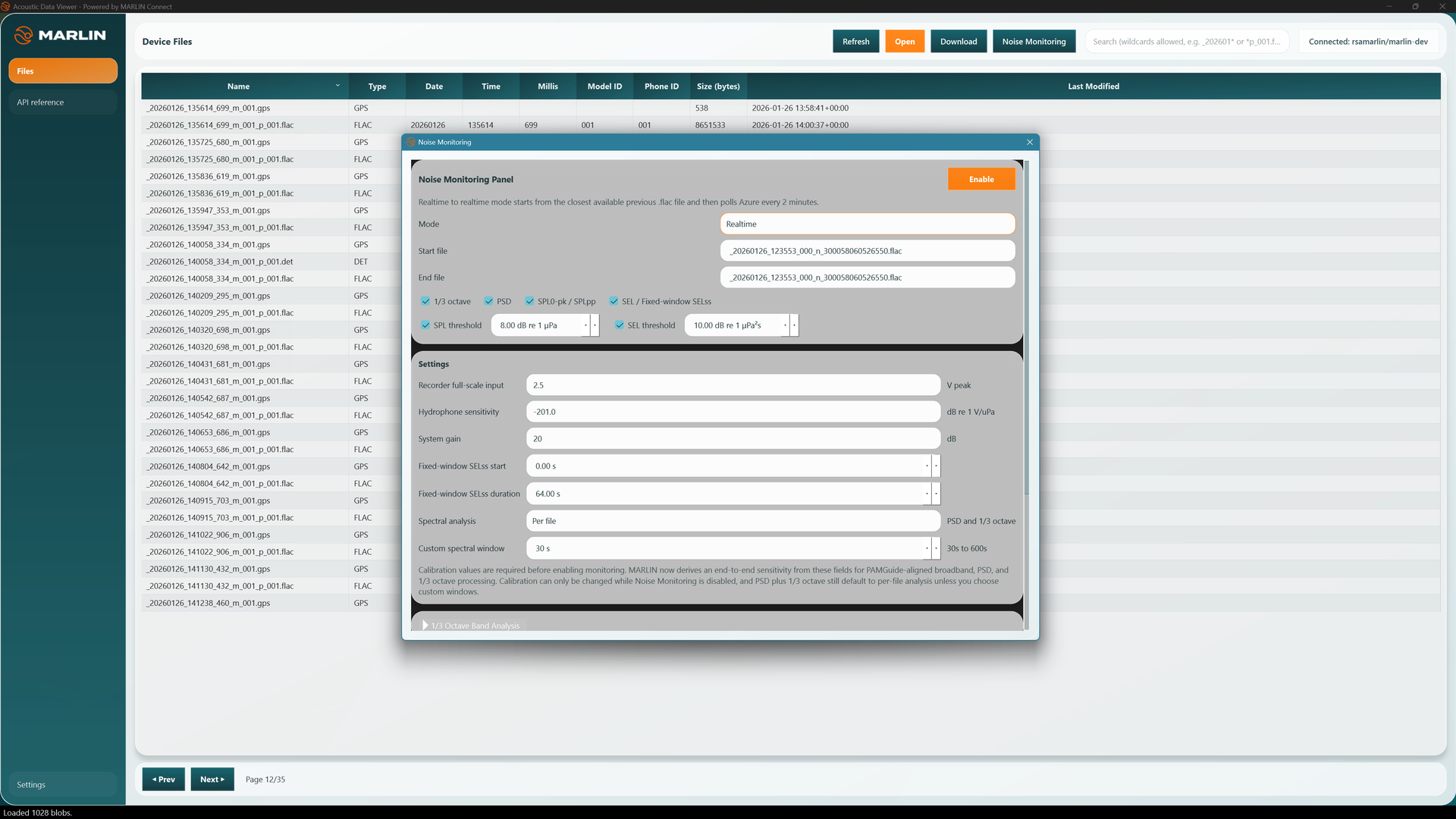
Job one is measurement: calibrated noise metrics, computed on your own machine the moment the audio lands. Job two is recognition: machine-learning detectors, built in-house, that pick out the things worth knowing about. In Marlin Connect, the two meet on the same spectrogram.
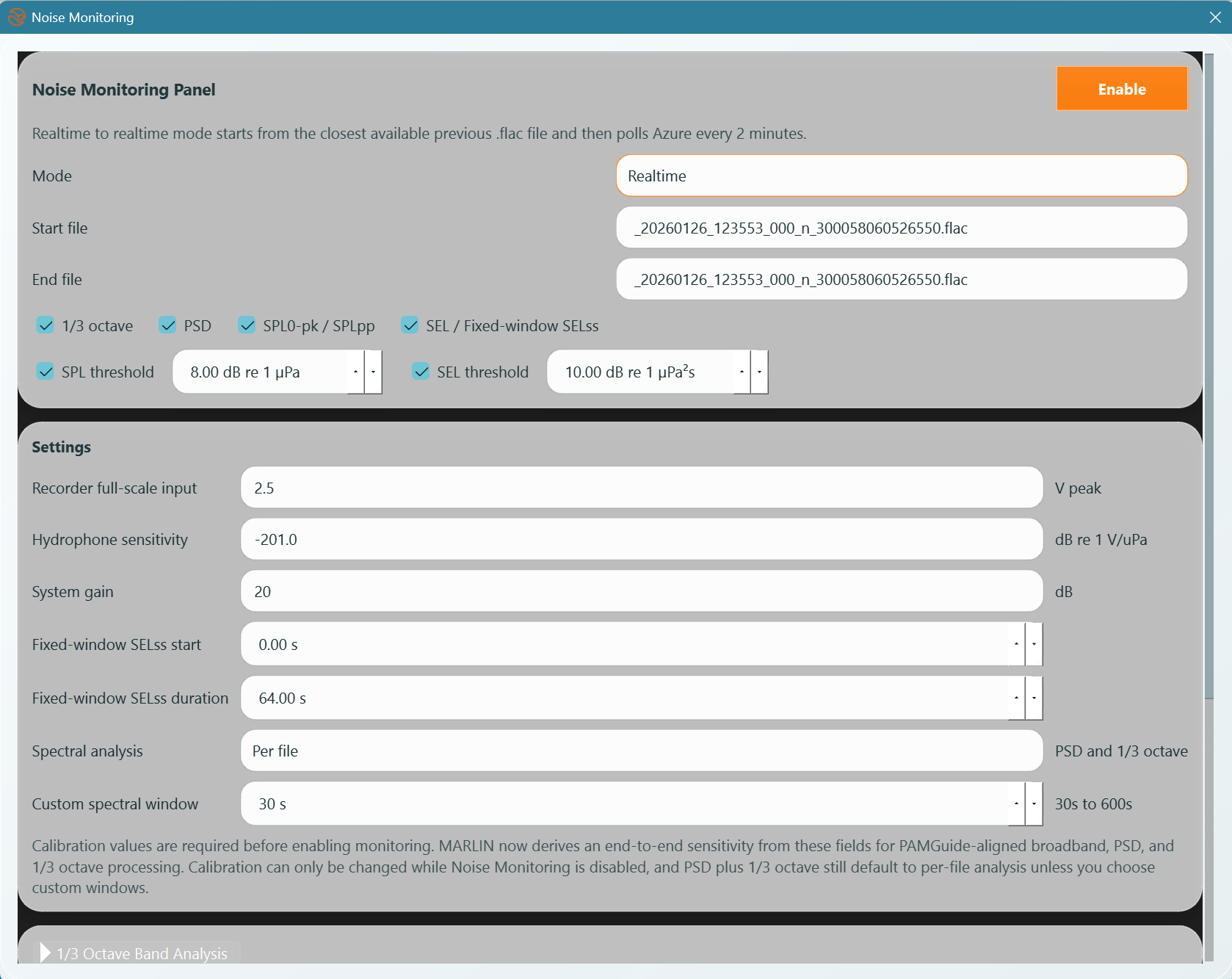
Noise measurements, computed where you are
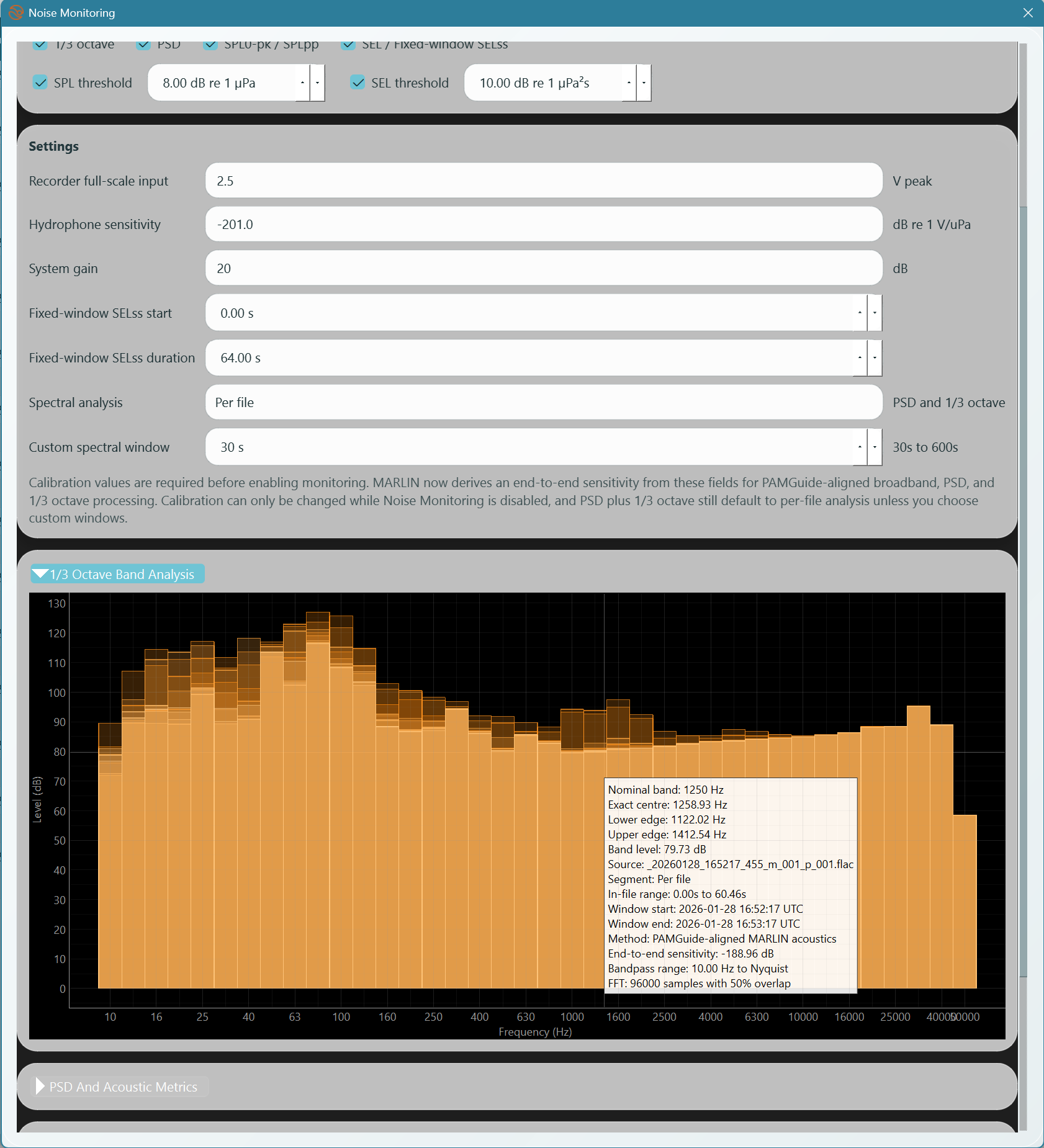
Noise monitoring answers four questions the industry keeps asking, with four standard metrics: how strong the sound is (SPL), how much total energy arrives over time (SEL), where that energy sits in frequency (PSD), and how it falls into standard reporting bands (1/3-octave).
It's calibrated end to end — hydrophone sensitivity, gain and full-scale input all feed a proper, defensible level. And it runs locally, inside Marlin Connect, on your own hardware: no upload, no cloud round-trip, no queue. Your raw audio stays with you and the numbers appear without added latency. Set thresholds, and MARLIN flags the windows that cross them.
- 0 calibrated metrics
SPL · SEL · PSD · 1/3-octave - 0 added latency
metrics run on your own desktop - 0 cumulative-exposure window
in line with marine-mammal guidance
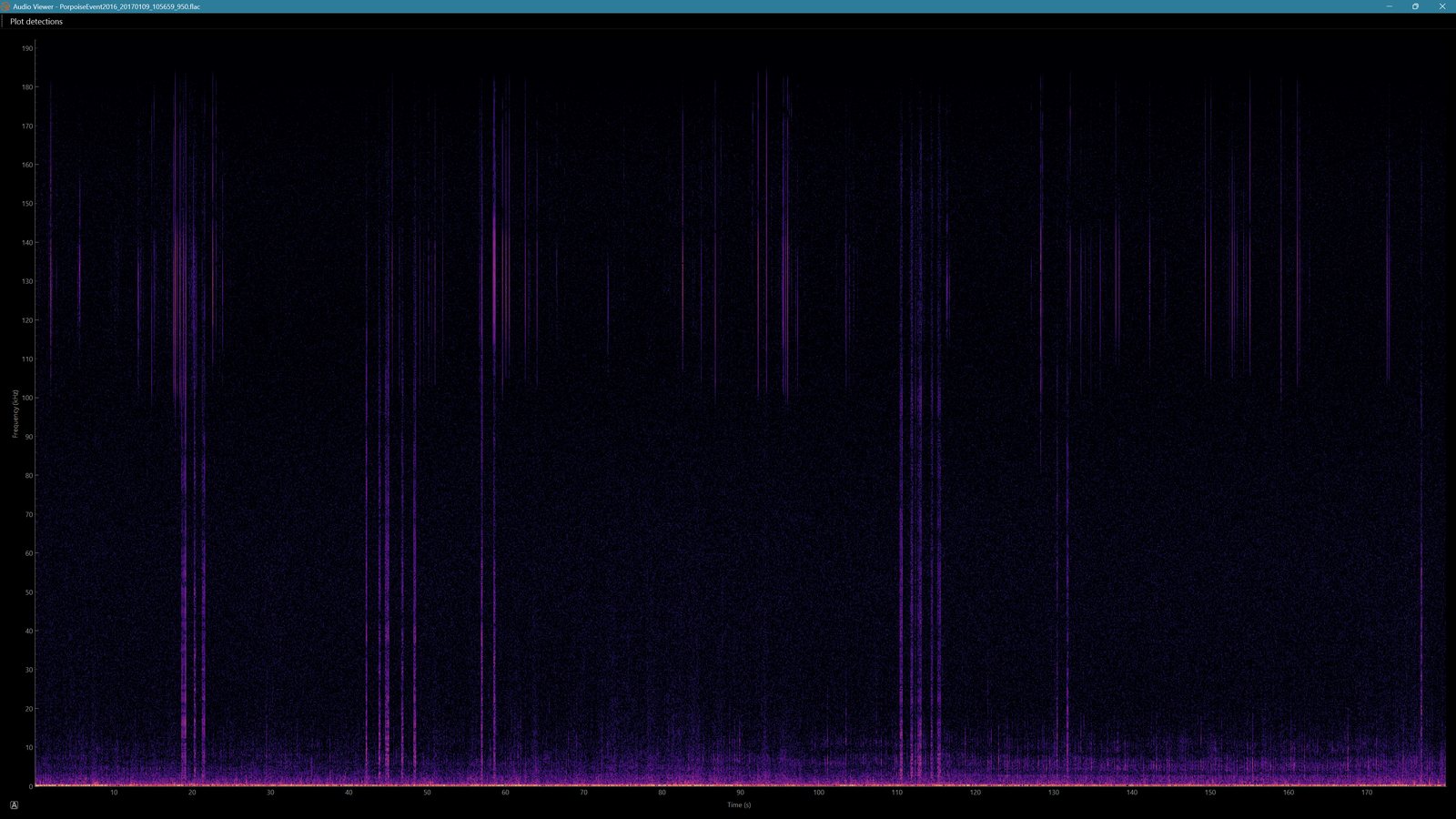
Models that know what they're hearing
The detectors are ours. RS Aqua builds them in-house, on our own high-performance compute, with marine-soundscape specialist Dr Ellen White — and we keep that expertise on hand to tune and extend the models for a site or a target.
They've been stress-tested across a range of settings, and they're built to run in two places: in the cloud for heavy lifting, and on the edge — on a Marlin Link unit on the buoy — when decisions need to happen at sea.
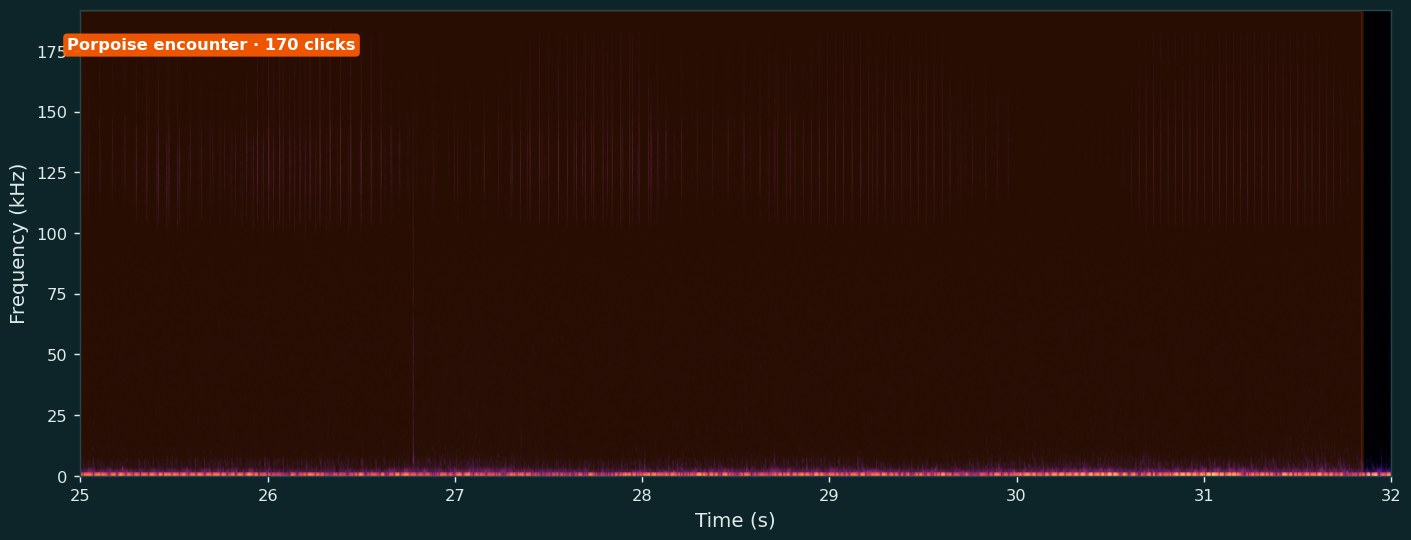
Finding a porpoise in the clicks
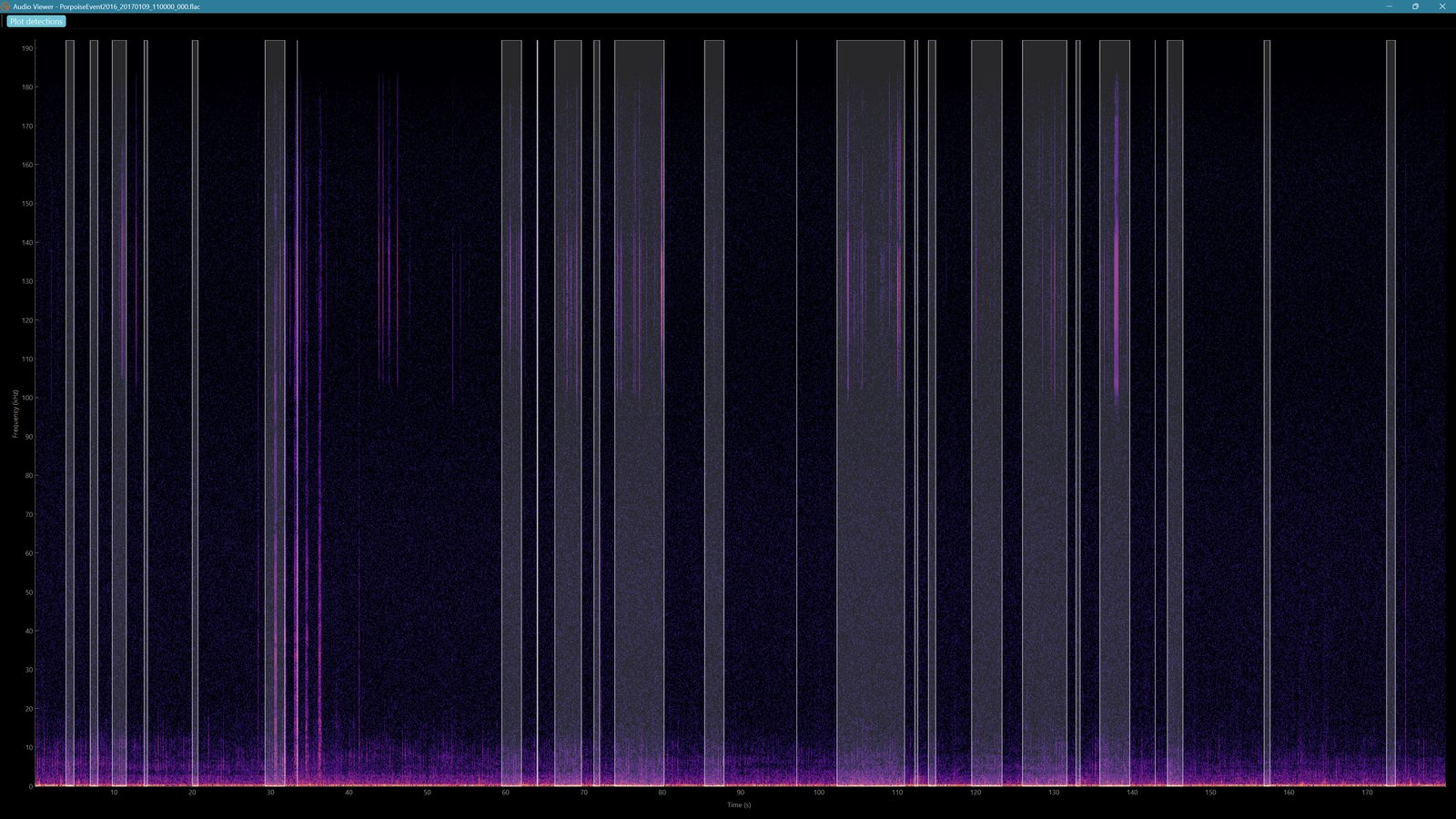
Harbour porpoise announce themselves in fast trains of high-frequency clicks. MARLIN's porpoise detector picks those encounters out of hours of audio and marks them on the spectrogram.
It's been validated on simulated datasets and is ready for deployment — a fit for marine-mammal monitoring, mitigation, and compliance work where knowing when animals were present is the whole job.

Understanding ambience, marking the rest
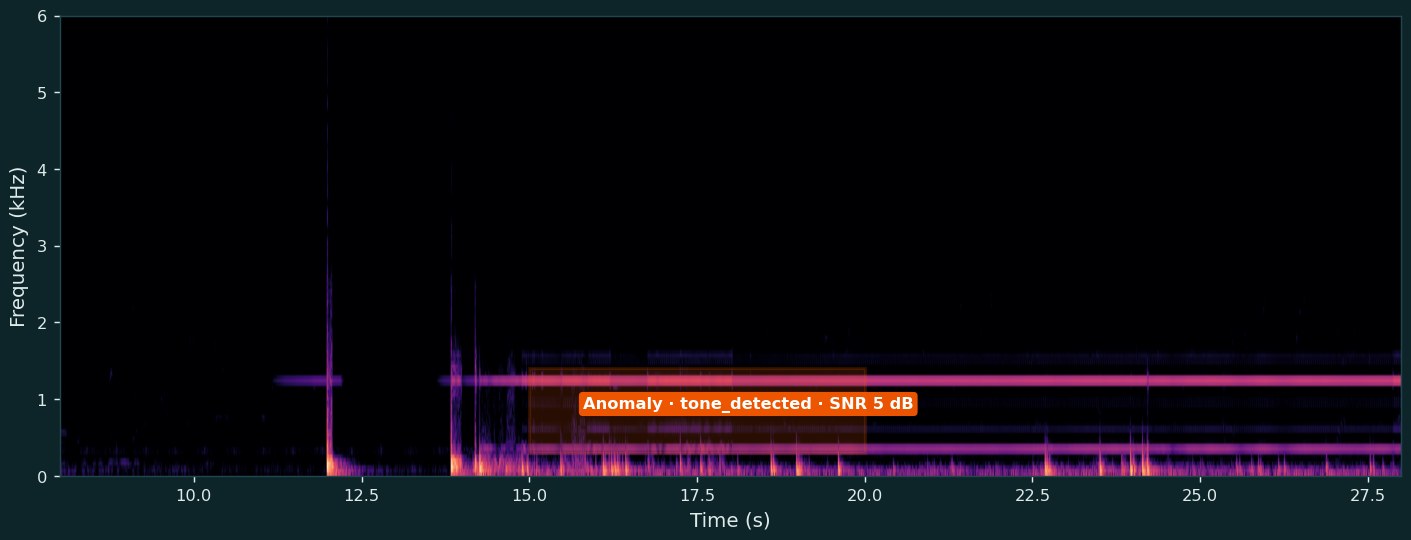
The anomaly detector learns what a site sounds like. Given a short baseline period, it builds a soundmap of the local environment through a real-time learning pipeline, then flags whatever doesn't fit.
That makes it a powerful first-layer filter: catch the unusual, then hand it on to a cascade of models to classify a specific signature. It was stress-tested at NATO's REPMUS 2025 exercise and performed strongly — get in touch for detailed metrics. Think harbour and infrastructure security, environmental-change detection, and triaging the unknown.
Measurement and meaning, on one spectrogram
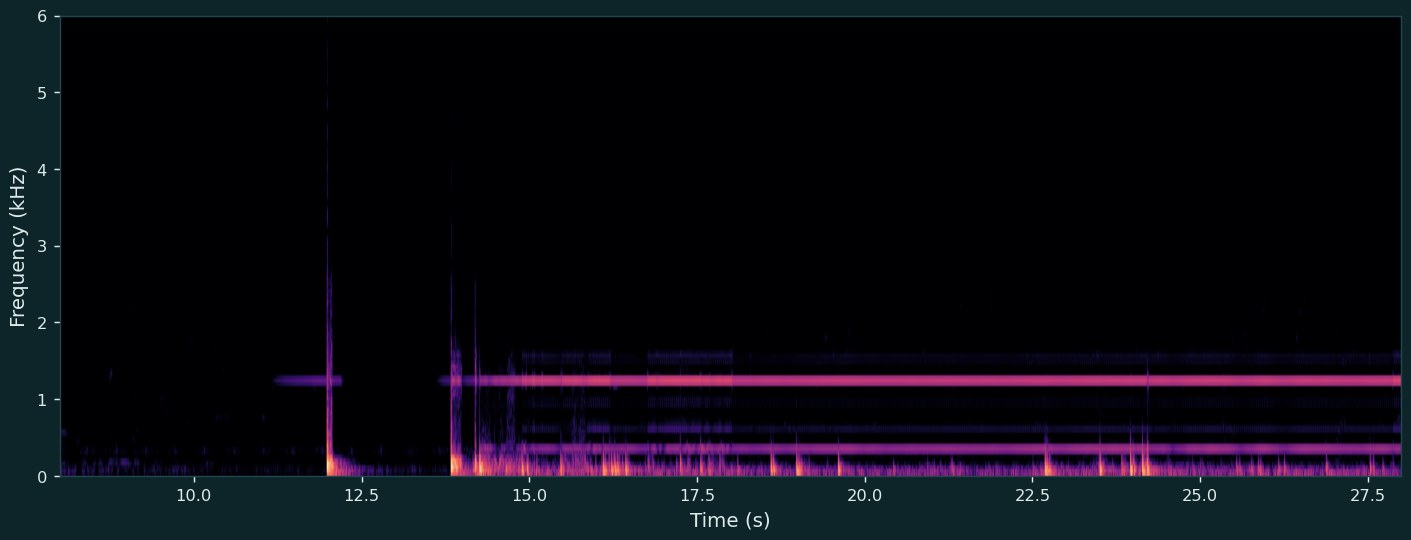
Here's the part we're proud of. For users with the features enabled, Marlin Connect draws the metrics and the detections as overlays on the same spectrogram. You see how loud — and you see what it was — in one place.
 scroll ↓
 A calibrated measurement tells you how much energy arrived. A detector tells you what made it. Having both — local metrics with no latency and cloud-grade detection, ready for edge or cloud — in a single pipeline is rare. It's the whole point of MARLIN.
Where we think this goes
We build these as general capabilities, not one-offs. Calibrated noise plus learnable detection covers a lot of ground:
- Offshore wind & construction — noise compliance and marine-mammal mitigation.
- Marine protected areas & habitat monitoring.
- Harbour and defence security — flagging novel or unexpected sound.
- Fisheries, bycatch reduction, and long-baseline ocean-sound research.
And because the same models run on the edge, a fleet of Marlin Links can cover an area, not just a point — spatial awareness from many listening posts, each thinking for itself.